Key Takeaways:
- Budget in a range, not a single number. National averages like $26,943 are a useful anchor, but your actual cost depends on scope, materials, and local labor rates — expect anywhere from roughly $14,600 to $41,600 for a typical project.
- Lead times are the hidden budget killer. Cabinets alone can take 8 to 16 weeks to arrive, with countertops, appliances, and tile stacking their own delays on top — a stalled schedule often costs more than any single material upgrade.
- Use the 5–15% rule as a sanity check. Spending between 5% and 15% of your home’s current value on a kitchen remodel keeps the project aligned with what you’re likely to recoup, especially if resale is a factor.
- Know your goal before you get quotes. Remodeling to enjoy the space long-term calls for different choices than remodeling to sell, so decide this upfront to avoid scope creep later.
- Cabinetry drives the biggest chunk of cost. It shapes both layout and overall spend, and refacing existing boxes instead of full replacement can preserve the look for meaningfully less money.
- Order long-lead items before demolition starts. Locking in cabinets and appliances early is one of the cheapest decisions you can make, since it sidesteps storage costs and rescheduled trades.
- Get several written quotes. Pricing for identical work can swing significantly between contractors, so multiple bids give you real leverage and a clearer sense of a fair price.
A kitchen remodel is one of those projects that sounds simple until you actually start pricing things out. New cabinets, a slab of quartz, a farmhouse sink, maybe a wall knocked down for better flow — it all adds up fast, and it adds up faster in 2026 than it did just a couple of years ago. If you’re starting to plan a remodel and wondering what a “realistic” budget even looks like anymore, you’re not alone. Between shifting material costs, longer lead times, and a wide range of price estimates floating around online, it’s genuinely hard to know where your project should land. This guide breaks down what’s actually driving kitchen remodel costs this year, what two recent industry reports reveal about where homeowners are spending their money, and how to build a budget that won’t blow up halfway through demolition.
Why Kitchen Remodels Cost What They Cost in 2026

Let’s start with the number everyone wants first: what does a kitchen remodel actually cost right now. According to Angi’s 2026 kitchen remodel cost report, which is pulled from more than 13,000 verified projects completed through its network of pros, the typical kitchen remodel lands around $26,943, with most homeowners spending somewhere between $14,589 and $41,554. That’s a wide range, and it’s wide on purpose — the final number depends heavily on the scope of the project, the materials you choose, and what labor costs in your specific market.
It’s worth noting that this figure represents a fairly broad sample of projects, from modest refreshes to more involved renovations, which is exactly why the spread is so large. A kitchen where you’re swapping countertops and adding new appliances sits at the lower end of that range, while a full gut renovation with structural changes, new plumbing runs, and custom cabinetry pushes well past it. Even relatively contained upgrades, like adding new appliances or new countertops, can start around $3,500 and climb from there depending on what else gets touched along the way.
A few line items tend to surprise first-time renovators:
- Plumbing work — repiping a kitchen runs about $7,500 on average, though the total can range anywhere from $1,500 to $15,000 depending on the size of the space and the materials used.
- Electrical work — hourly electrician rates for kitchen remodels typically fall in the $50 to $100 range, and that’s before accounting for the actual materials or new circuits needed for larger appliances.
- Material choice — something as small as choosing copper piping over CPVC can shift your plumbing bill significantly, since copper runs several times more per linear foot.
The takeaway here isn’t that $26,943 is “the” number you should expect to pay. It’s that the national average is a useful anchor, but your actual budget needs to be built around your specific scope, not a headline figure from a single source.
What the Latest Renovation Trends Tell Us
The second data point worth paying attention to isn’t about price at all — it’s about behavior, and it helps explain why costs and timelines are what they are this year. Block Renovation’s How America Renovates 2026 report found that kitchens are the second most common renovation project homeowners are tackling this year, with 39% of people currently renovating working on their kitchen, trailing only bathroom projects. That’s a meaningful number. When nearly two in five active renovators are focused on the same room, it puts real pressure on the contractors, suppliers, and cabinet makers who service that demand.
That demand shows up most clearly in lead times. The same report notes that cabinet lead times of 8 to 16 weeks are now common, and that countertops, appliances, and tile each carry their own separate lead times that stack on top of each other. In practical terms, that means the biggest budget risk in 2026 often isn’t a single expensive material choice — it’s a stalled schedule. Every week your kitchen sits half-finished because cabinets haven’t shown up yet is a week of contractor downtime, storage costs for materials already delivered, and rescheduling headaches with every other trade involved in the job.
Put these two data points together and a clearer picture emerges. Prices are elevated and widely variable because so many people are competing for the same pool of skilled labor and materials at the same time, and that same competition is what’s stretching out how long everything takes to arrive. A realistic 2026 kitchen budget has to account for both dimensions — not just the dollar figure, but the calendar.
Setting a Budget That Matches Your Goals
Before you start picking finishes, it helps to decide what kind of remodel you’re actually doing, because “kitchen remodel” covers an enormous range of projects. A cosmetic refresh — new paint, hardware, maybe refaced cabinets — is a very different budget conversation than a full gut renovation that moves plumbing and knocks down walls.
A commonly used rule of thumb among financial advisors and designers is to spend somewhere between 5% and 15% of your home’s current value on a kitchen remodel. For a $400,000 home, that works out to a range of roughly $20,000 to $60,000, which lines up reasonably well with the national averages discussed above. This isn’t a hard rule, but it’s a useful sanity check: if your dream kitchen quote is coming in at 25% or 30% of your home’s value, it’s worth pausing to think about whether that spending will actually be recouped, especially if you might sell within the next several years.
A few questions worth asking yourself before you settle on a number:
- Are you remodeling to enjoy the space for years to come, or to prepare the home for sale?
- Does your current layout work, or are you paying a premium to move plumbing and electrical for a new floor plan?
- Is this kitchen dramatically nicer than the rest of the homes in your neighborhood, which can limit how much of that investment you’ll get back at resale?
Answering these honestly before you start collecting quotes will save you from scope creep later, when it’s much harder to walk back decisions that are already half-built.
Where the Money Actually Goes
Once you have a target budget, it helps to understand how that money typically gets divided across a project. While every remodel is different, a few categories consistently eat up the largest share of the total:
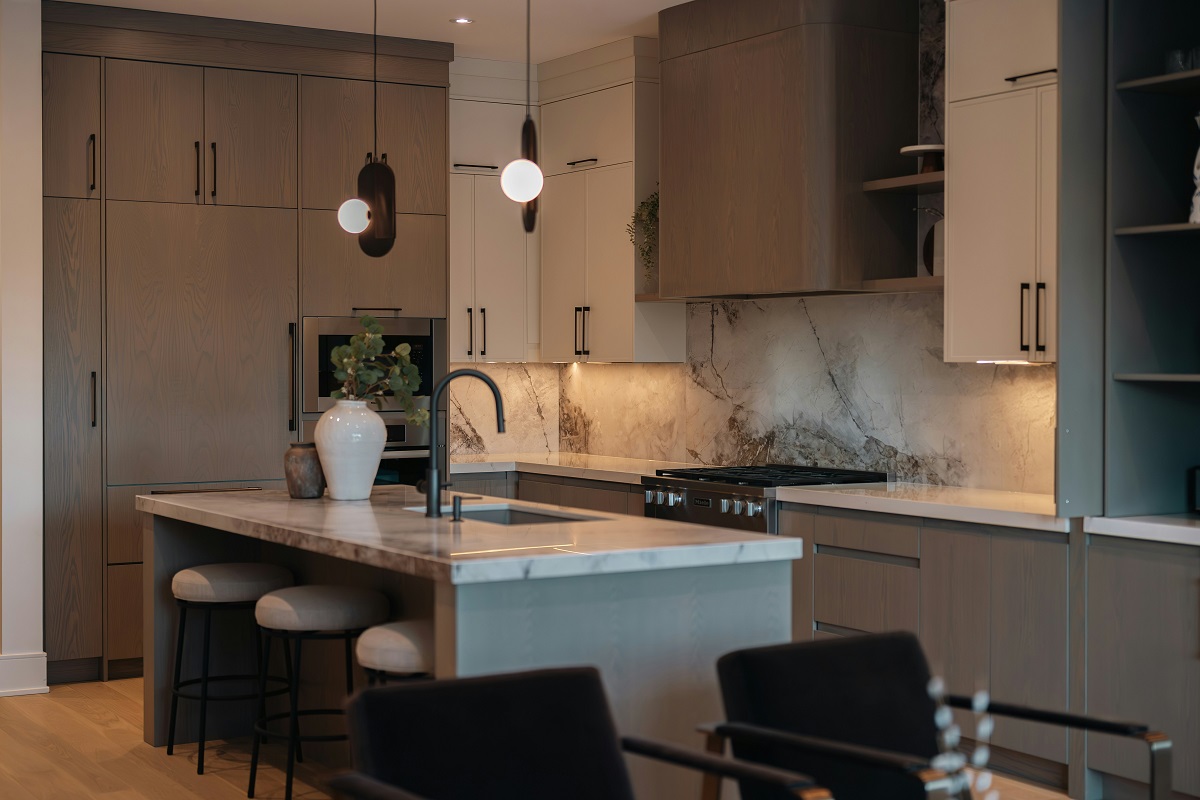
- Cabinetry — usually the single biggest expense in a kitchen remodel, since cabinets determine both the layout and the overall feel of the space. Custom or semi-custom cabinets cost significantly more than stock options, and long lead times mean cabinets are often the first thing you need to order.
- Countertops — material choice creates a huge price swing here. Laminate sits at the budget end, while quartz, quartzite, and marble climb steeply per square foot, especially with more elaborate edge profiles or waterfall installations.
- Appliances — a full suite of new appliances can range from a few thousand dollars for standard models to tens of thousands for professional-grade or built-in options.
- Labor — plumbing, electrical, and general contracting labor typically make up a large chunk of the total, and labor costs vary more by region than almost any other line item.
- Permits and design fees — often overlooked in early budgeting, but necessary for any project involving structural, plumbing, or electrical changes.
Flooring, lighting, backsplash tile, and paint round out the rest of the budget, and while they’re individually smaller expenses, they add up quickly when you’re outfitting an entire room from scratch.
Smart Ways to Trim Costs Without Cutting Corners
If your initial quotes are coming in higher than you’d hoped, there are several ways to bring the number down without sacrificing quality in ways you’ll regret later.
- Keep your existing footprint. Moving plumbing or knocking down walls adds design time, permitting complexity, and additional trades to the job. If your current layout is functional, working within it is one of the fastest ways to control costs.
- Consider cabinet refacing instead of full replacement. If your existing cabinet boxes are structurally sound, refacing the doors and drawer fronts can deliver a similar visual transformation for meaningfully less money than tearing everything out.
- Order long-lead items early. Given how common extended cabinet and appliance lead times have become this year, locking in your selections and placing orders before demolition begins can prevent costly delays and the storage or rescheduling fees that come with them.
- Get multiple written quotes. Pricing for identical scopes of work can vary significantly between contractors, so collecting at least a few bids from licensed professionals gives you real leverage and a clearer sense of a fair price in your area.
- Separate “must-haves” from “nice-to-haves” early. Decide upfront which elements are non-negotiable, so if costs creep up mid-project, you already know what’s safe to cut.
Timing Your Project Around Other Home Projects
One thing that’s easy to overlook when budgeting for a single room is how it fits into the bigger picture of your home. If a kitchen remodel is one piece of a larger renovation — a bathroom update, new flooring throughout the house, or exterior work — the sequencing matters just as much as the individual budgets. When you’re coordinating major home upgrades, keeping the same electricians or plumbers working across multiple projects instead of scheduling them separately can reduce overall labor costs and prevent conflicts that stretch out your timeline. It also gives you a chance to batch permitting and inspections where local rules allow, which can shave real time off the overall process.
If you know you’ll be tackling other projects within the next year or two, it’s worth having a conversation with your contractor about whether any prep work — like electrical panel upgrades or structural changes — makes sense to handle now rather than paying for mobilization and demolition twice.
Questions to Ask Before You Sign a Contract
Before committing to a contractor or finalizing a budget, a short list of questions can help you avoid the most common and expensive surprises:
- What is included in this estimate, and what counts as an “allowance” that could change once selections are finalized?
- What are the current lead times for cabinets, countertops, and any special-order appliances?
- How will delays in material delivery affect the project schedule and cost?
- What’s the contractor’s process for change orders if you decide to adjust scope mid-project?
- Are permits and inspections included in the quote, or billed separately?
- What’s the payment schedule, and does it align with completed milestones rather than just the calendar?
Getting clear answers to these questions upfront won’t eliminate every surprise, but it will make the ones that do come up far easier to manage.
Bringing It All Together
A realistic kitchen remodel budget in 2026 isn’t just a single number pulled from an average — it’s a range built around your specific goals, your home’s value, and the current realities of material lead times and contractor demand. The data makes clear that costs vary widely depending on scope, and that the sheer volume of kitchen projects happening right now means timelines deserve just as much attention as pricing. Go in with a clear sense of what you’re trying to achieve, build in a cushion for the unexpected, and order the big-ticket items early enough that a slow supplier doesn’t turn into a stalled kitchen for months on end.